Case study
Agency OS
Multi-agent work and human approval
Summary
Problem: Let several specialist agents produce work while one person stays the decision-maker.
- Role
- Product designer — design, implementation, and evaluation
- Team
- Solo
- Timeline
- Two months
Outcomes
- Observed
Working MVP. — No usage metrics yet.
Product walkthroughs
Three scripted walkthroughs of the product: delegating work to agents, setting a client's brand, and reviewing the finished piece. They recreate the interface; they are not live recordings. The costs, flags, client, and video shown are from a demo run and are examples, not results. I built the walkthroughs in code with Claude Code.
Agency OS Coordinator
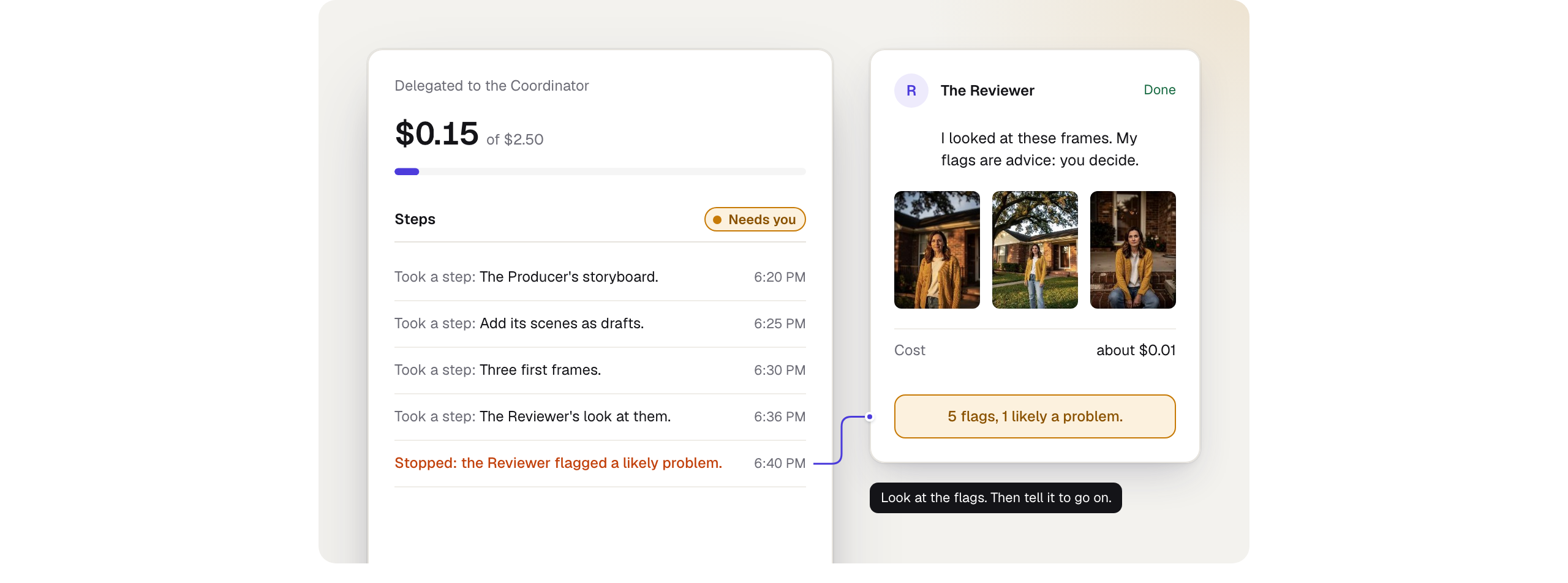
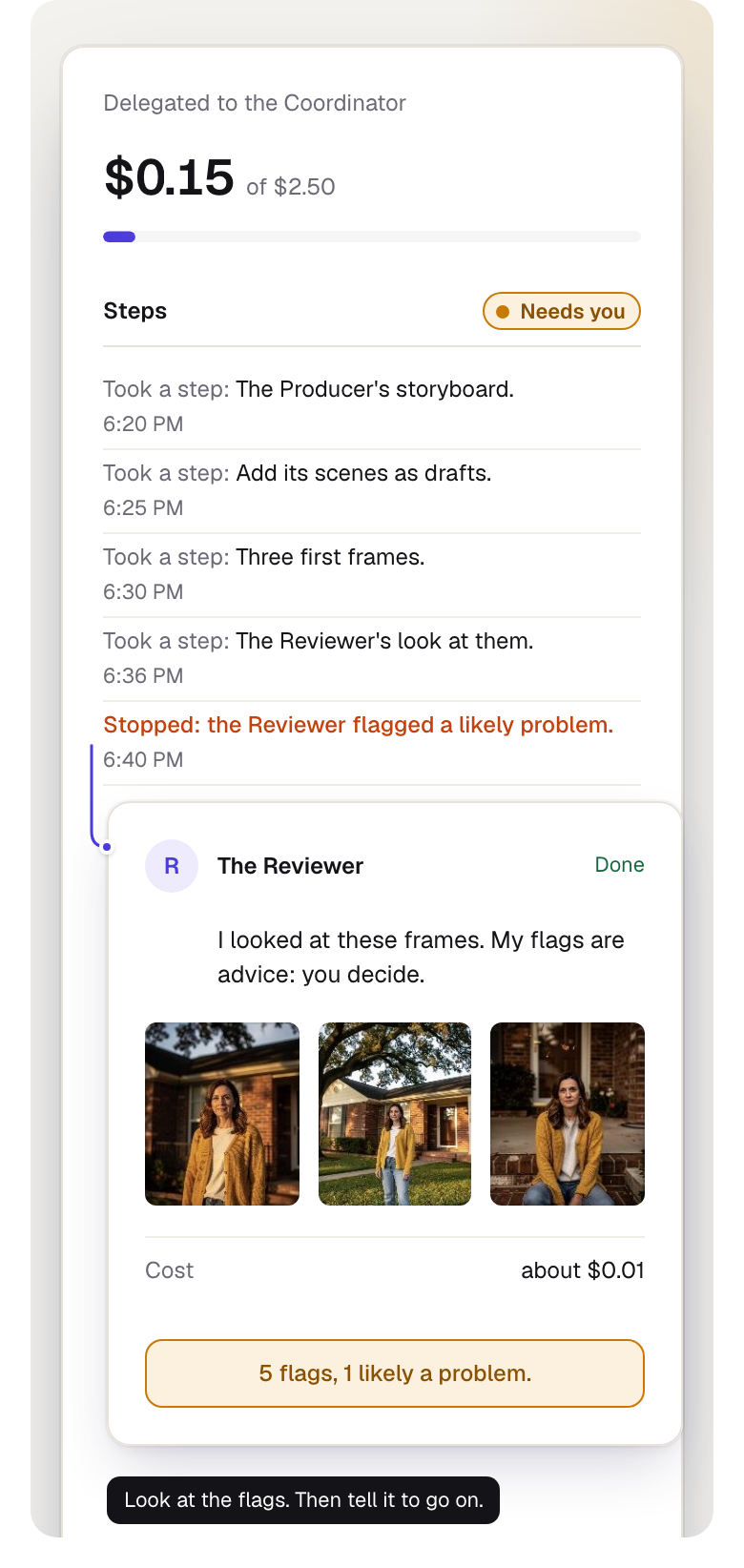
Paused. Press play to watch.
Agency OS Brand Kit
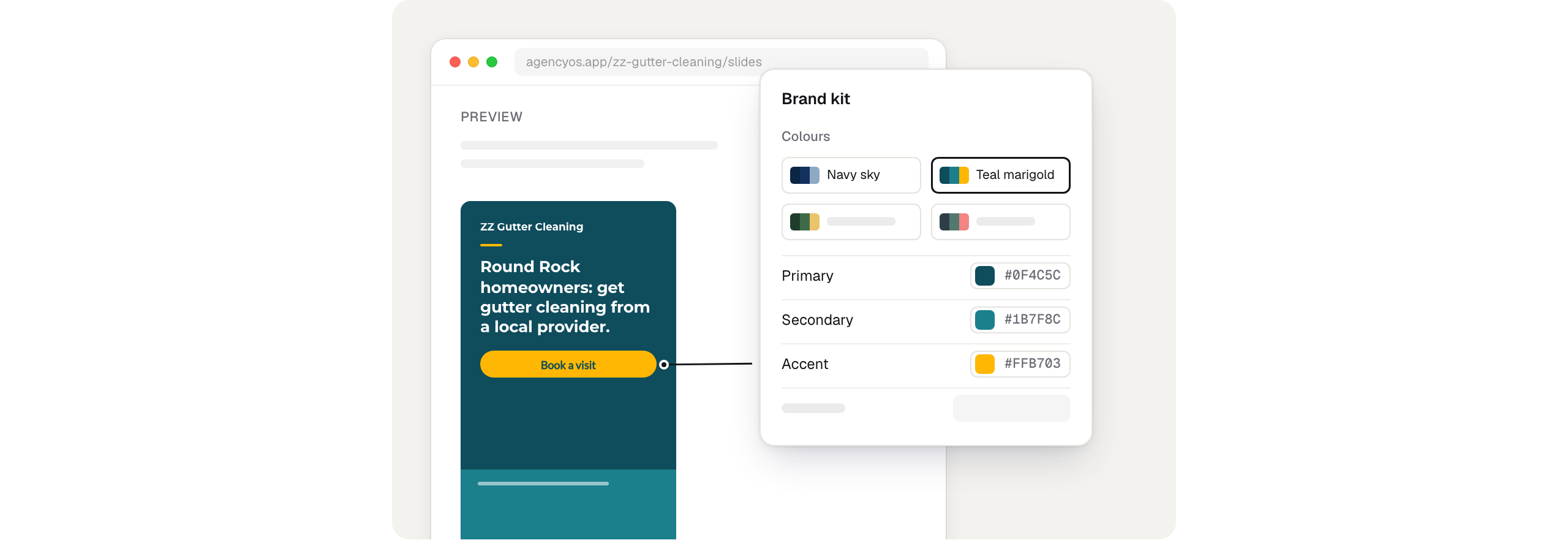
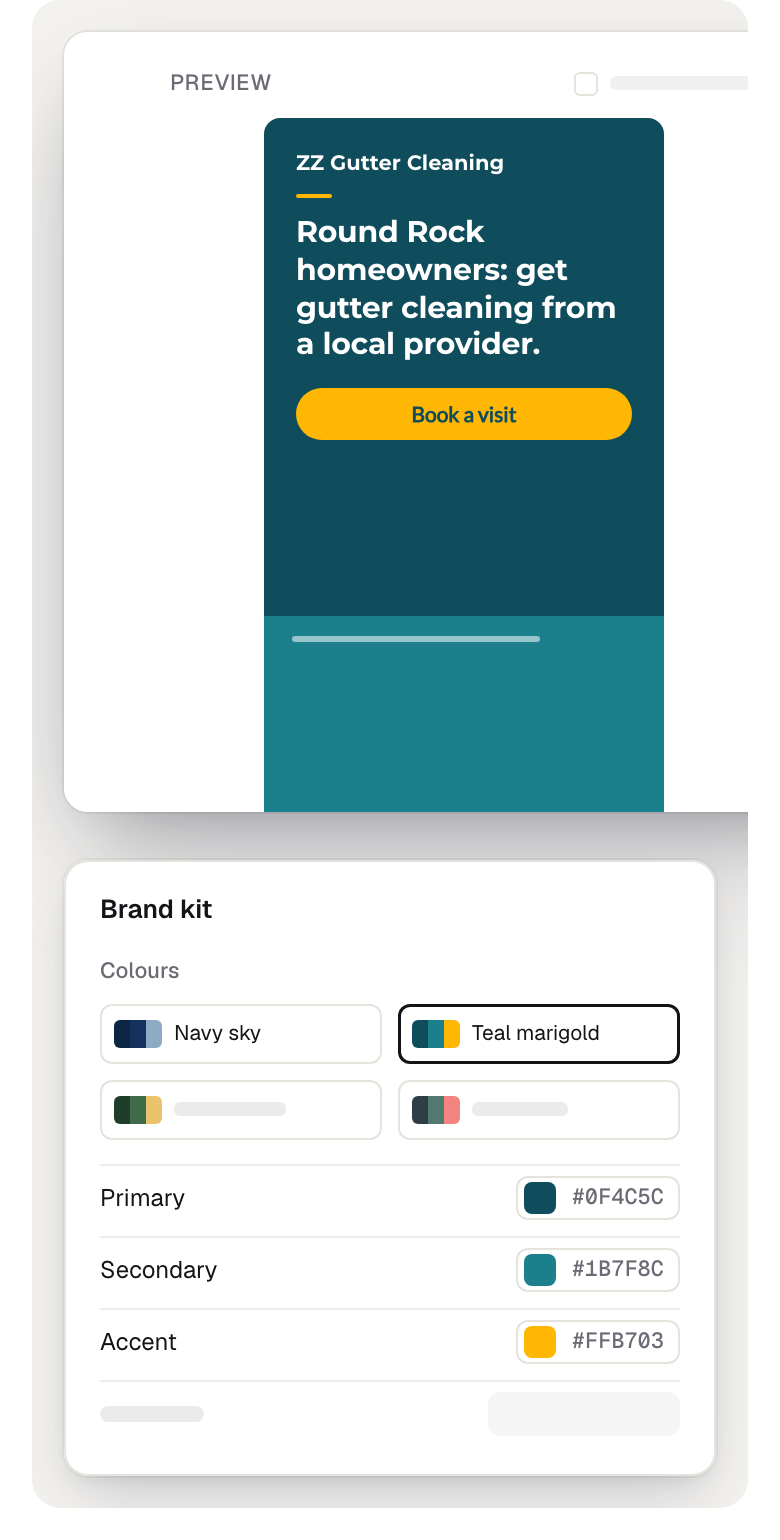
Paused. Press play to watch.
Agency OS Video Graph
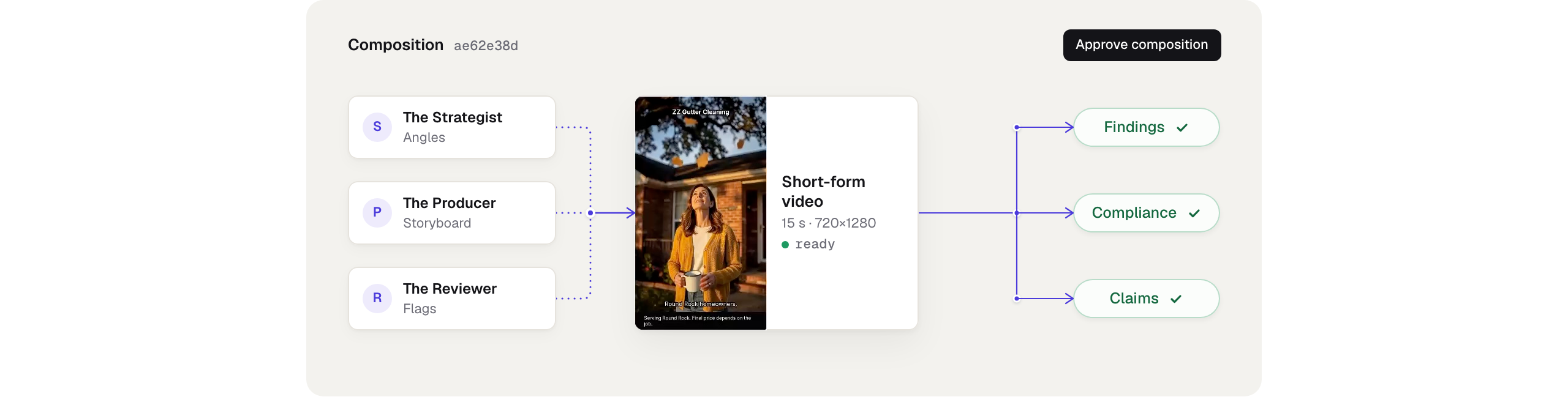
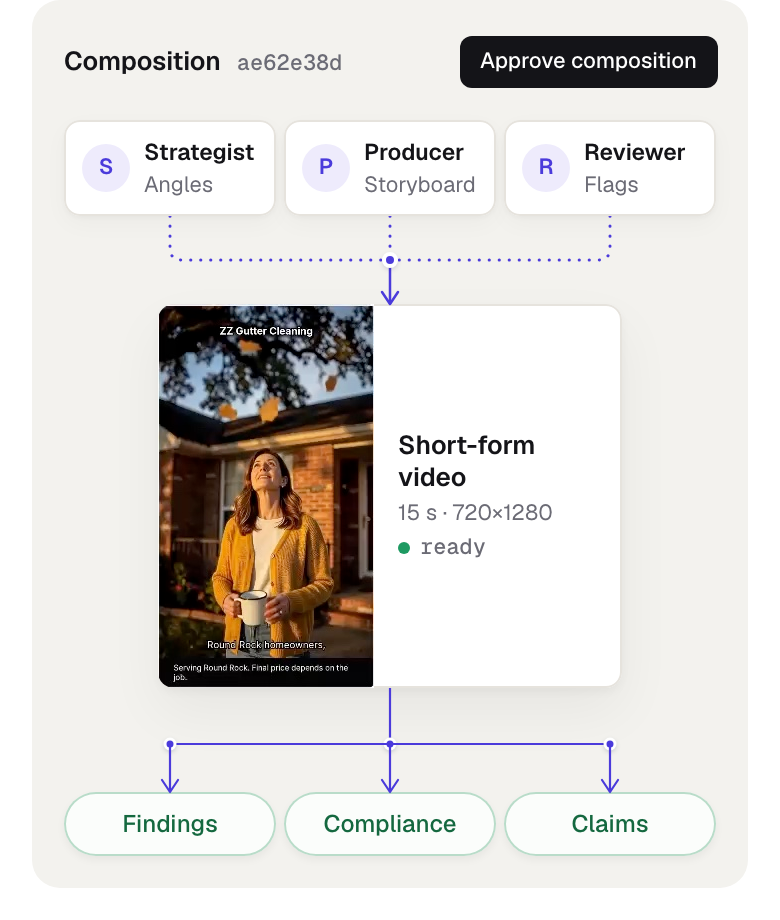
Paused. Press play to watch.
Context and stakes
When several specialist agents produce work together, it gets hard to see who did what and easy for decisions to be made without anyone choosing them. I designed Agency OS so agents draft and one person decides.
I designed, built, and evaluated it alone over two months.
Where AI entered and why
A coordinator agent delegates draft work to three specialists: a strategist proposes angles, a producer builds the storyboard, and a reviewer flags problems. The agents only draft. A person reviews their output and decides whether it goes ahead.
Trust and control design
Visible work and a spending limit. The coordinator's steps, its spending limit, and the frames under review stay on screen together, so the person can see what has been done and what it cost.
A stop when something looks wrong. When the reviewer agent flags a likely problem, the coordinator pauses with a "Needs you" state and asks the person to inspect the flags before anything continues.
Explicit approval. The finished video is shown alongside each agent's contribution and its findings, compliance, and claims checks. It goes no further until the person selects "Approve composition".
Outcome
Observed: working MVP. No usage metrics yet.